












Quick Answer: Is September a Good Time to Visit Spiti Valley?
Yes. September is one of the most practical months to visit Spiti Valley, especially for travellers who want mountain views, road trips, monasteries and comparatively fewer crowds than the busiest summer weeks.
Quick Trip Facts: Spiti Valley in September 2026
| Question | Quick Answer |
|---|---|
| Is September good for Spiti? | Yes, it is one of the better months for a road trip |
| Weather | Pleasant in sunlight, cold mornings and nights |
| Heavy woollens needed? | Yes |
| Best route for first-timers | Shimla–Kinnaur–Kaza |
| Recommended trip duration | 8–10 days |
| Is snowfall guaranteed? | No |
| Full Spiti circuit possible? | Subject to current road conditions |
| Suitable for families? | Yes, with a slower itinerary |
| Best for | Road trips, couples, photography and sightseeing |
Official Himachal Tourism information identifies April to October as a good period for visiting Spiti. It also specifically recommends heavy woollens from September because evenings can become very cold.
September is particularly useful because travellers may be able to approach Spiti through the Shimla-Kinnaur side and, subject to current road conditions, the Manali side as well.
However, Spiti is a high-altitude Himalayan destination. Road conditions can change quickly because of snowfall, landslides, maintenance or other local conditions. Always verify the latest road status shortly before departure.
If you are deciding between September and the following month, also read our Spiti Valley in October 2026 guide before booking your trip.
Why Visit Spiti Valley in September?
September offers a useful balance between accessibility and the beginning of colder autumn conditions.
The busiest summer travel period starts to ease. At the same time, winter has usually not fully taken control of the valley.
This makes September attractive for travellers interested in:
- road trips
- mountain photography
- Buddhist monasteries
- village experiences
- quieter travel
- clear landscapes
- bike trips
- couple trips
- solo travel
- small-group tours
However, September should not be treated like an ordinary warm-weather holiday.
Spiti remains cold because of its altitude. Even when afternoons feel comfortable in sunlight, temperatures can fall sharply after sunset.
Therefore, warm clothing should be part of your basic packing rather than an emergency backup.
Spiti Valley Weather in September
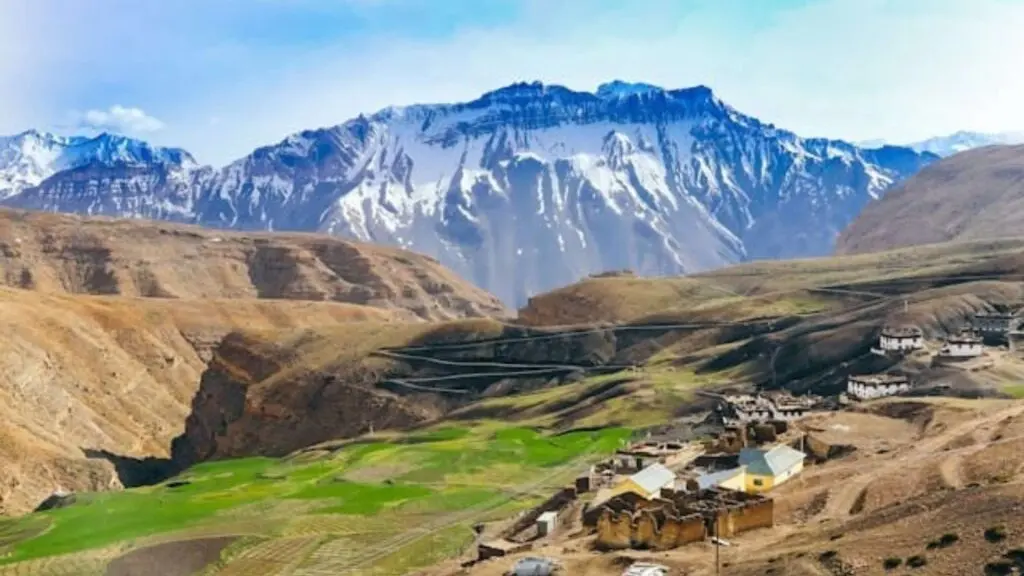
Weather is one of the biggest concerns for anyone planning a Spiti Valley trip in September.
Spiti is a cold desert at high altitude. Conditions can differ significantly between sunny afternoons and early mornings or nights.
Instead of relying on one exact temperature prediction weeks before your trip, prepare for changing conditions.
What Can You Generally Expect?
| Time | What to Expect |
|---|---|
| Morning | Cold to very cold |
| Afternoon | Often more comfortable in direct sunlight |
| Evening | Temperature drops quickly |
| Night | Cold; proper woollens needed |
| High passes | Considerably colder |
| Weather changes | Can be sudden |
Official Himachal Tourism specifically recommends heavy woollens by September for Spiti.
That is a useful practical signal.
Do not pack only according to the temperature displayed for Chandigarh, Delhi, Shimla or Manali.
Conditions in Kaza and higher villages can feel completely different.
Does It Snow in Spiti Valley in September?
Snowfall is possible in high Himalayan regions, particularly at greater elevations, but fresh snowfall should never be promised for specific September dates.
There is also a difference between:
- seeing snow on distant/high mountain areas;
- finding old snow around high-altitude terrain; and
- actually experiencing fresh snowfall during your stay.
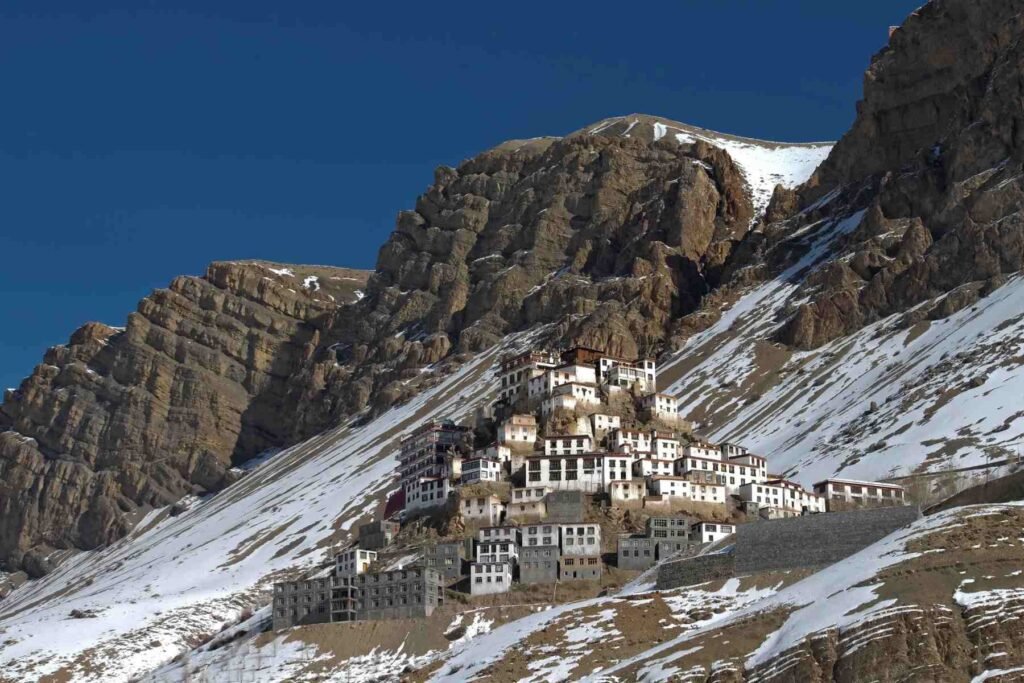
If snow is the only reason for your trip, September may not provide the certainty you expect.
However, if your priorities are landscapes, villages, monasteries and a road trip, September can be an excellent choice.
Are Spiti Valley Roads Open in September?
September generally falls within the main road-travel season, but there is no single “Spiti road” whose status answers every question.
You need to check individual routes.
The two main approaches are:
Route 1: Shimla → Kinnaur → Kaza
A common route is:
Shimla → Rampur → Reckong Peo/Kalpa → Nako → Tabo → Kaza
This approach is popular because altitude increases more gradually.
It can therefore be a sensible choice for travellers visiting Spiti for the first time.
Route 2: Manali → Kaza
A typical route connects:
Manali → Atal Tunnel side → Gramphu → Batal → Kunzum Pass → Kaza
This is a spectacular journey, but it involves high-altitude terrain and is more seasonal.
Official Himachal Tourism lists regular Manali-Kaza bus connectivity during the July-to-October period.
That does not mean the road is guaranteed to be usable every day in that entire window.
Weather and local road conditions still matter.
Which Route Is Better in September?
For many first-time travellers, entering from the Shimla-Kinnaur side and exiting toward Manali can make sense when all relevant roads are operating.
Why?
The ascent is more gradual.
Instead of moving rapidly from a lower altitude to Kaza, you can spend nights at intermediate destinations.
A typical progression may look like:
Chandigarh → Shimla → Kalpa → Tabo → Kaza
Then, subject to road conditions:
Kaza → Manali → Chandigarh
This creates a full circuit.
Travellers starting from Punjab should also read our detailed Chandigarh to Spiti Valley route guide before finalising their itinerary.
Spiti Valley September Itinerary: 8-Day Practical Plan
Trying to cover Spiti too quickly is one of the most common planning mistakes.
A mountain trip should not be designed like a city sightseeing checklist.
Here is a practical example.
Day 1: Chandigarh to Shimla or Narkanda
Start early.
Instead of trying to reach deep into Kinnaur on the first day, use the first day to enter the mountains comfortably.
Stay around Shimla or Narkanda depending on your schedule.
Day 2: Shimla/Narkanda to Kalpa
Continue through the Sutlej Valley.
Kalpa provides a useful overnight stop before moving toward the higher Spiti region.
Avoid treating the day only as transportation.
Keep breaks for food, viewpoints and road delays.
Day 3: Kalpa to Tabo via Nako
Proceed toward Nako and then Tabo.
Nako can be included as a stop depending on time and road conditions.
Stay at Tabo.
Day 4: Tabo to Kaza
Before reaching Kaza, travellers can explore destinations around the Tabo-Dhankar belt depending on available time.
Reach Kaza and rest.
Do not immediately fill the evening with strenuous activities.
Day 5: Kaza Local Sightseeing
Use this day for the high villages and nearby attractions.
Depending on current access and your interests, the circuit may include:
- Key Monastery
- Kibber
- Langza
- Hikkim
- Komic
Official Himachal Tourism lists Key Monastery about 12 km from Kaza, Langza around 16 km and Hikkim around 17 km.
Do not obsess over visiting every location in one day.
At high altitude, a slower experience is often better.
Day 6: Kaza and Nearby Areas / Buffer Day
A buffer day is extremely valuable in Spiti.
Use it for places you could not cover earlier, rest, photography or dealing with unexpected road/weather changes.
If your itinerary allows, nearby areas such as Pin Valley can also be considered subject to current conditions.
Day 7: Kaza to Manali
Attempt this route only after confirming that the required roads and high-altitude sections are operational.
The distance alone does not tell you how demanding the drive can be.
Mountain roads can be slow.
Start early and avoid unnecessary delays.
Day 8: Manali to Chandigarh
Return toward Chandigarh after a proper night’s rest.
If you have more time, adding another night in Manali can make the journey less tiring.
Should You Do a 5-Day Spiti Trip?
From Chandigarh or Delhi, a five-day full Spiti circuit is generally too rushed for most first-time tourists.
Technically fitting locations into a schedule is not the same as enjoying the trip safely.
A rushed plan can mean:
- very long driving days
- poor acclimatisation
- little sightseeing time
- fatigue
- no weather buffer
- problems if a road closes
For most travellers, 8–10 days is much more practical for a meaningful Spiti road trip from Chandigarh.
Best Places to Visit in Spiti Valley in September
1. Kaza
Kaza works as the main base for exploring central Spiti.
You will find accommodation, restaurants and access to nearby villages from here.
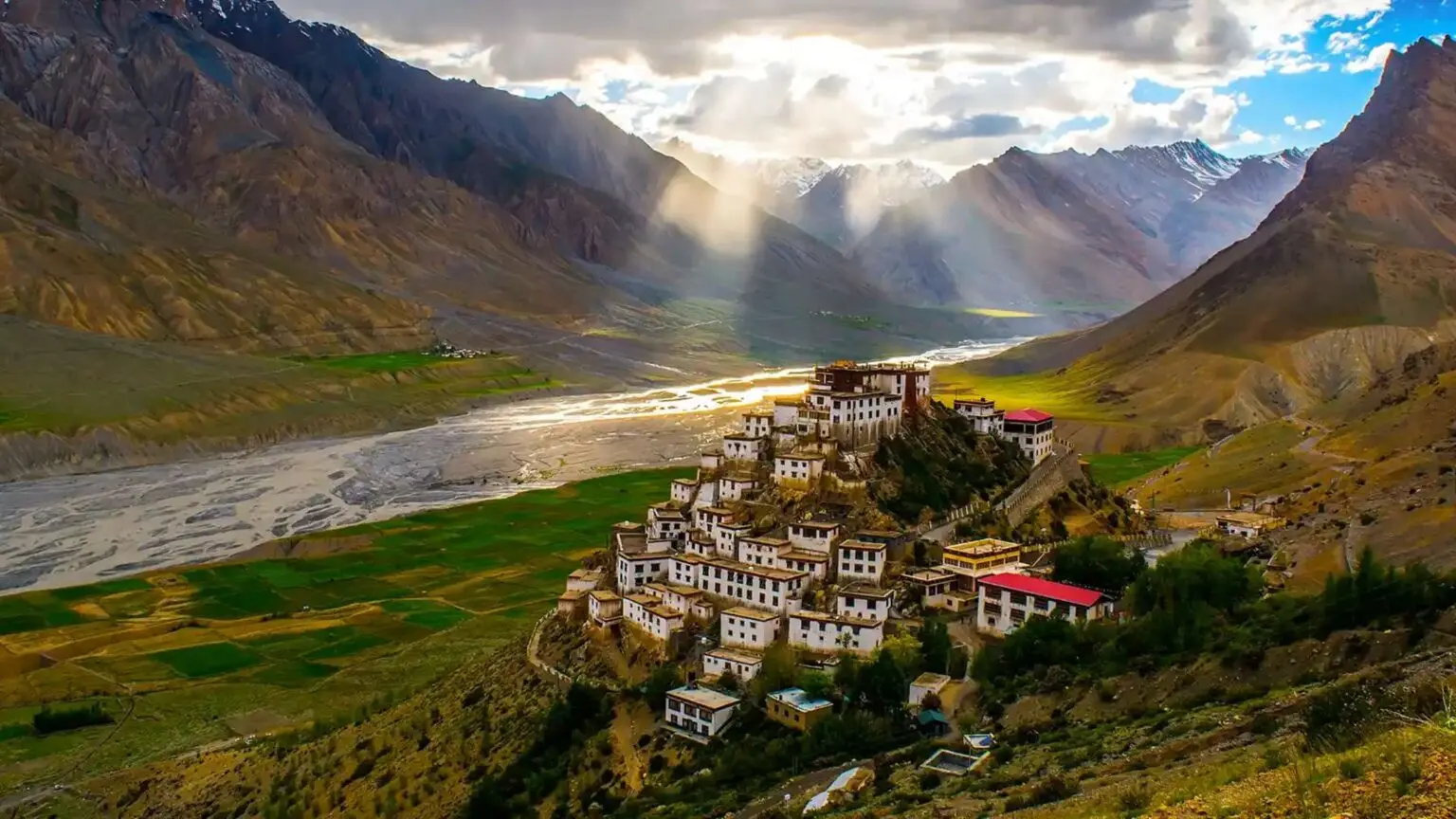
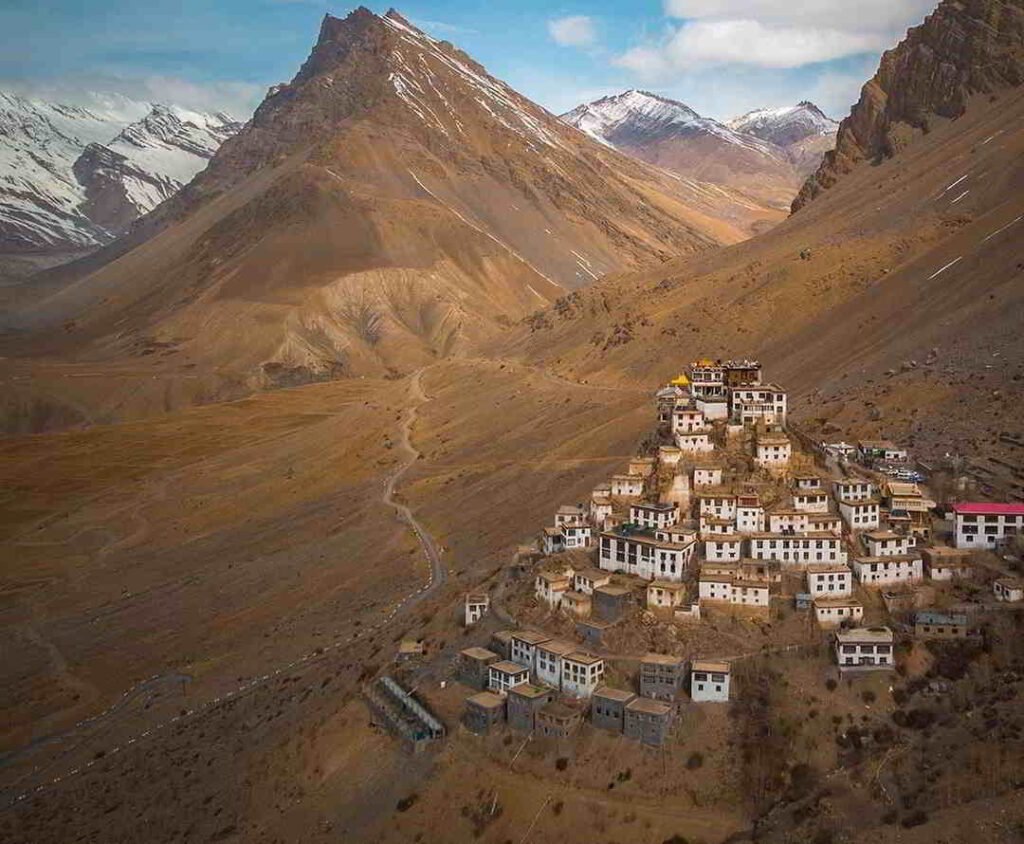
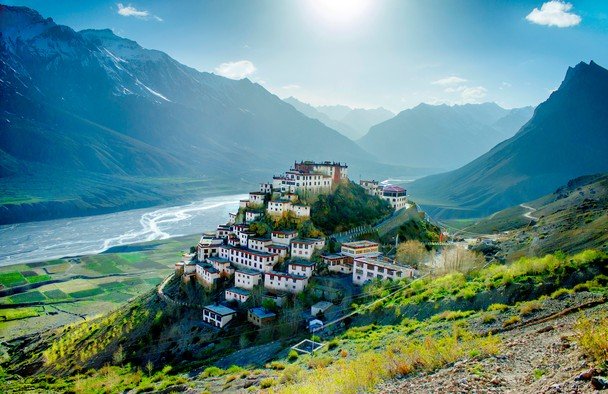
2. Key Monastery
Key is among the best-known monasteries in the valley.
Its setting above the Spiti River also makes it an important photography stop.
3. Kibber
Kibber can be combined with Key depending on your itinerary.
Take your time rather than treating it as another photo stop.
4. Langza
Langza is famous for its high-altitude landscape and distinctive Buddha statue.
The surrounding terrain is a major part of the experience.
5. Hikkim
Hikkim is another popular stop on the high-village circuit around Kaza.
6. Komic
Komic is often combined with Langza and Hikkim.
Road and weather conditions should still be considered.
7. Tabo
Tabo deserves more than a rushed roadside stop.
Its monastery complex is one of the culturally important experiences on the Shimla-Kinnaur-Spiti route.
8. Nako
Nako is commonly included while entering or leaving Spiti through Kinnaur.
It can also help break a long road journey.
Is Chandratal Open in September?
Chandratal is highly seasonal.
September can fall within its travel period in suitable years, but accessibility depends on current road and weather conditions.
Do not build your entire Spiti itinerary around Chandratal without verifying access shortly before travel.
Also remember that accommodation and facilities around remote high-altitude areas are much more limited than in Manali or Shimla.
A backup itinerary is essential.
How Much Does a Spiti Trip Cost?
There is no honest single price for a Spiti trip.
Your total depends on:
- starting city
- number of travellers
- own car vs taxi
- hotel category
- number of nights
- meals
- bike rental
- fuel
- sightseeing
- route
- seasonal pricing
A couple using a private taxi will spend significantly more per person than four travellers sharing the same vehicle.
Similarly, a traveller using buses and basic homestays can spend far less than someone booking premium stays.
Main Cost Heads
| Expense | What Changes the Cost |
|---|---|
| Transport | Bus, own car, rented vehicle or private taxi |
| Stay | Homestay, basic hotel or premium property |
| Food | Local meals vs premium cafés |
| Fuel | Vehicle and full route |
| Activities | Optional experiences |
| Buffer days | Additional hotel and food expenses |
Rather than choosing an itinerary from a viral “Spiti under ₹X” video, calculate costs according to your actual travel style.
Spiti Valley by Car in September
A self-drive trip gives flexibility, but it also increases responsibility.
Before leaving, check:
- tyres
- spare tyre
- brakes
- coolant
- engine oil
- battery
- lights
- basic tools
Do not wait until the fuel gauge is almost empty before refuelling.
Mountain journeys should always maintain a safety margin.
Download offline maps as well.
Mobile connectivity should not be treated as guaranteed on every section of the journey.
Spiti Valley by Bike in September
September is attractive for bikers because of the dramatic landscapes and established travel season.
However, this is not a beginner city ride.
Before attempting it, consider:
- riding experience
- cold-weather riding
- puncture repair
- luggage weight
- protective gear
- fuel planning
- water crossings/rough sections
- altitude
- daily riding hours
Avoid designing 12-hour riding days simply to complete a social-media itinerary.
Fatigue is a genuine road-safety issue.
Is Spiti Valley Safe for Families in September?
Many families travel to Spiti, but “family friendly” does not mean every itinerary is suitable for every person.
Consider:
- age of children
- elderly travellers
- previous high-altitude experience
- medical conditions
- journey duration
- cold tolerance
- access to healthcare
Do not copy an itinerary designed for healthy adults travelling without children.
Families usually benefit from slower travel and better accommodation planning.
Can You Visit Spiti Valley With Kids?
Parents should be particularly careful about altitude and long road journeys.
Children may not communicate discomfort in the same way as adults.
A paediatrician or doctor familiar with the child’s medical history is the right person to provide individual medical guidance.
From a travel-planning perspective:
- keep the itinerary slower;
- avoid unnecessary rapid ascent;
- maintain hydration;
- provide adequate rest;
- carry familiar food/snacks;
- keep warm clothing easily accessible;
- don’t ignore symptoms because sightseeing is already booked.
A dedicated Spiti Valley with Kids guide will be added to this cluster as we expand it.
Spiti Valley for Couples in September
September can be excellent for couples who prefer scenic road trips over conventional resort holidays.
However, understand the type of destination you are choosing.
Spiti is better suited to couples who enjoy:
- long drives
- mountain landscapes
- simple stays
- monasteries
- photography
- remote villages
If your idea of a holiday requires luxury hotels, nightlife and easy access to every facility, Manali may be a better fit.
Spiti Valley Solo Trip in September
Solo travel provides flexibility, but preparation matters more in remote terrain.
Share your itinerary with someone at home.
Keep:
- offline copies of bookings
- emergency contacts
- identification
- cash
- power bank
- offline maps
- medicines
- warm clothing
Avoid making last-minute risky route decisions simply because other travellers are attempting them.
What to Pack for Spiti Valley in September
Official tourism guidance recommends heavy woollens from September.
A practical packing list includes:
Clothing
- thermal innerwear
- warm jacket
- fleece
- full-sleeve layers
- warm trousers
- woollen cap
- gloves
- warm socks
- comfortable shoes
Sun Protection
High altitude can mean strong sun exposure even when the air feels cold.
Carry:
- sunscreen
- sunglasses
- lip balm
- moisturiser
- cap
Travel Essentials
- government ID
- cash
- power bank
- charging cables
- reusable water bottle
- snacks
- offline maps
- torch
- basic first-aid supplies
- personal prescription medicines
Do not pack all warm clothes at the bottom of your luggage.
Keep one warm layer accessible during the drive.
Altitude: Don’t Ignore Acclimatisation
Kaza sits at high altitude.
Rapid ascent can cause problems even for physically fit travellers.
Fitness and altitude tolerance are not the same thing.
A slower approach through Kinnaur can help provide more gradual elevation gain, although it does not eliminate altitude risk.
If someone develops concerning symptoms, do not rely on travel blogs for diagnosis or treatment.
Seek appropriate medical assistance.
Food and Water Tips
High-altitude travel can affect appetite.
Prefer simple meals if your stomach is uncomfortable.
Carry water but avoid forcing excessive quantities simply because someone gave you a fixed “litres per day” rule online.
Also carry a few familiar snacks for long road sections.
Remote areas may not provide the same food choices available in Chandigarh, Delhi or Manali.
Mobile Network, Internet and Cash
Do not plan a remote Himalayan journey assuming continuous high-speed connectivity.
Before leaving a major town:
- download maps;
- save hotel details offline;
- screenshot important documents;
- inform family of your next stop;
- carry some cash.
Digital payments are convenient when connectivity works, but cash provides a useful backup.
Common Mistakes to Avoid on a September Spiti Trip
Mistake 1: Trying to Cover Everything
More locations do not automatically create a better trip.
Keep enough time to actually experience Spiti.
Mistake 2: No Buffer Day
One weather or road disruption can affect the entire itinerary.
A buffer day protects your return schedule.
Mistake 3: Underestimating Cold
September is not peak winter, but nights can still be very cold.
Mistake 4: Believing Old Road-Status Posts
A route reported open ten days ago may not reflect today’s condition.
Mistake 5: Planning by Distance Alone
A 150 km mountain journey can take far longer than a similar distance on a highway.
Mistake 6: Ignoring Altitude
Do not turn the first few days into a race.
Mistake 7: Depending Entirely on Internet Access
Keep essential information offline.
September vs October: Which Is Better for Spiti?
If you can choose freely, September generally offers a stronger balance for first-time road travellers.
| Factor | September | October |
|---|---|---|
| Cold | Cold | Colder |
| Full-circuit flexibility | Generally better | More uncertain later |
| Crowds | Lower than peak summer | Often lower |
| Heavy woollens | Required | Definitely required |
| First-time traveller | Strong choice | Requires more flexibility |
| Winter feel | Beginning | Stronger |
October can still be rewarding, particularly for travellers who prefer colder, quieter conditions.
However, road planning becomes increasingly important as the season progresses.
Read our Spiti Valley in October 2026 guide for the complete comparison.
Who Should Visit Spiti in September?
September is particularly suitable for:
- road-trip lovers
- photographers
- couples
- experienced bikers
- small groups
- solo travellers
- people interested in monasteries and Himalayan culture
- travellers who prefer fewer crowds
Who Should Think Twice?
You may want a different destination if:
- you cannot tolerate long mountain drives;
- you have no flexibility for delays;
- you require luxury facilities everywhere;
- you want guaranteed snowfall;
- you have health concerns that make high altitude unsuitable;
- you are travelling with people who struggle significantly with cold or rough roads.
Manali or Shimla can be easier alternatives for many travellers.
Is Spiti Valley in September Worth It?
For the right traveller, absolutely.
September combines a mature road-travel season with colder autumn landscapes and potentially fewer tourists than peak summer.
But the best Spiti trip is not the itinerary with the maximum number of attractions.
It is the one that gives you enough time to:
travel safely, acclimatise, explore villages, enjoy the landscape and handle unexpected mountain conditions.
If your dates are flexible, compare September with our upcoming Spiti Valley in October 2026 guide.
For broader planning, read our Best Time to Visit Spiti Valley guide.
Travellers starting from Punjab can use our Chandigarh to Spiti Valley guide to plan the complete route.
Frequently Asked Questions
Is September 2026 a good time to visit Spiti Valley?
Yes. September falls within the broader April-to-October period recommended by Himachal Tourism for visiting Spiti. However, current road and weather conditions should always be checked before departure.
Is Spiti Valley cold in September?
Yes. Days in sunlight can feel more comfortable, but mornings, evenings and nights can be cold. Heavy woollens are recommended.
Is the Manali to Kaza road open in September?
September normally falls within the seasonal operating period, but daily accessibility depends on current road and weather conditions.
Is the Shimla to Kaza route open in September?
The Kinnaur approach generally forms part of the main Spiti access route during this season. Always check current road advisories.
Can I see snowfall in Spiti in September?
Fresh snowfall is possible in high mountain regions but cannot be guaranteed for particular dates.
Is September better than October for Spiti?
For many first-time travellers, September offers a better balance of road accessibility and autumn conditions. October becomes colder and can involve more seasonal uncertainty.
How many days are enough for Spiti from Chandigarh?
Around 8–10 days is more comfortable for many first-time travellers. A longer trip gives you more time for acclimatisation, sightseeing and road/weather buffers.
Can families visit Spiti in September?
Yes, but family itineraries should account for altitude, cold, long drives and the age/health of travellers.
What clothes should I carry?
Carry thermals, a proper warm jacket, fleece, gloves, woollen cap, warm socks and good walking shoes.
Should I enter Spiti from Shimla or Manali?
Many first-time travellers prefer entering via Shimla/Kinnaur because the altitude increases more gradually. A full circuit can then exit toward Manali when the route is operational.