











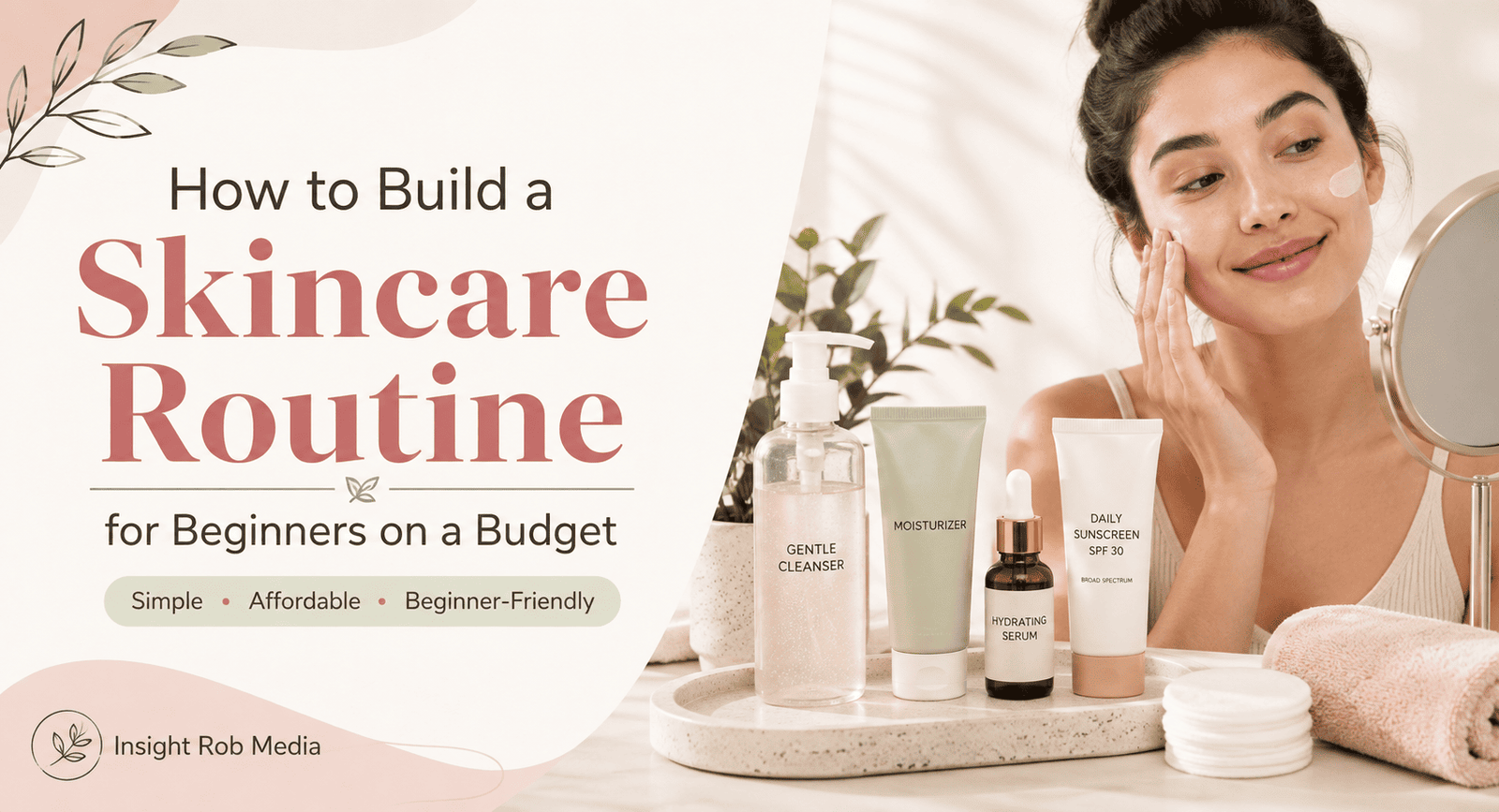
Starting a skincare routine can feel confusing and expensive. Social media often promotes lengthy routines containing cleansers, toners, serums, oils, masks, exfoliators, and specialised creams.
However, healthy skincare does not need to involve ten products or a large monthly budget. A basic routine built around cleansing, moisturising, and sun protection is enough for most beginners.
The best Skincare Routine for Beginners is one that suits your skin, remains affordable, and can be followed consistently. Instead of buying every trending product, focus on a few essentials that perform clear functions.
This guide explains how to create a simple morning and evening routine without wasting money or overwhelming your skin.
What Does a Basic Skincare Routine Really Need?
A beginner routine generally needs only three essential product categories:
- A gentle facial cleanser
- A suitable moisturiser
- A broad-spectrum sunscreen
The American Academy of Dermatology recommends a simple approach involving cleansing, moisturising, and protecting the skin. It also notes that products do not need to be expensive to be effective.
Once your skin becomes comfortable with these basics, you may add one treatment product for a specific concern. However, introducing too many products together can increase the risk of dryness, irritation, and breakouts.
Understand Your Skin Type First
Before purchasing anything, identify how your skin normally behaves.
Normal Skin
Normal skin generally feels comfortable and balanced. It is not excessively oily, dry, or sensitive.
People with normal skin can usually use a mild cleanser and a lightweight moisturiser.
Dry Skin
Dry skin may feel tight, rough, itchy, or flaky. It often benefits from creamy cleansers and richer moisturisers.
Look for moisturisers containing ingredients such as ceramides, glycerin, hyaluronic acid, or petrolatum. These ingredients can help reduce moisture loss and support skin hydration.
Oily Skin
Oily skin tends to appear shiny, particularly around the forehead, nose, and chin.
Choose a gentle foaming cleanser and a lightweight, non-comedogenic moisturiser. Harsh cleansers can irritate oily skin, so attempting to remove every trace of oil may make the routine uncomfortable. Dermatologists still recommend moisturising oily skin and selecting products labelled non-comedogenic or “won’t clog pores.”
Combination Skin
Combination skin is usually oily in certain areas and dry or normal elsewhere.
You may need a lightweight moisturiser across the face and a slightly richer application on dry areas.
Sensitive Skin
Sensitive skin may sting, burn, itch, or become red after using certain products.
Choose gentle and fragrance-free formulas. Remember that “unscented” and “fragrance-free” do not always mean the same thing. Unscented products may still contain ingredients used to hide a smell.
Affordable Morning Skincare Routine for Beginners
Your morning routine should prepare your skin for the day and protect it from environmental exposure.
Step 1: Cleanse Gently
Use a gentle cleanser to remove excess oil, sweat, and residue.
Wet your face with lukewarm water. Apply a small amount of cleanser using your fingertips, and then rinse thoroughly. Avoid scrubbing with brushes, rough washcloths, or abrasive sponges.
Dermatologists recommend using a gentle, non-abrasive cleanser and limiting face washing to twice daily and after heavy sweating.
People with very dry or sensitive skin may not need a full cleanse every morning. Rinsing with lukewarm water may be sufficient if the skin was properly cleansed the previous evening.
Budget tip: You do not need separate morning and evening cleansers. One suitable cleanser can perform both jobs.
Step 2: Apply Moisturiser
Moisturiser helps keep water in the skin and supports a comfortable skin barrier.
Apply it when your skin is slightly damp. This can help trap moisture rather than allowing it to evaporate immediately.
Choose the texture according to your skin type:
- Gel or light lotion for oily skin
- Lotion for normal or combination skin
- Cream or ointment for dry skin
- Fragrance-free cream for sensitive skin
Even acne-prone skin can benefit from moisturiser, especially when acne products cause dryness. Products labelled oil-free, non-comedogenic, or “won’t clog pores” are less likely to contribute to blocked pores.
Budget tip: Avoid buying separate day and night moisturisers at the beginning. A basic moisturiser can often be used during both routines.
Step 3: Apply Sunscreen
Sunscreen is one of the most important parts of a Skincare Routine for Beginners.
Choose a broad-spectrum, water-resistant sunscreen with SPF 30 or higher. Apply it to your face, neck, ears, and other exposed areas before going outdoors.
Broad-spectrum sunscreen helps protect the skin from UVA and UVB radiation. Dermatologists recommend SPF 30 or higher and advise reapplying during extended outdoor exposure, especially after sweating or swimming.
People with oily or acne-prone skin may prefer a lightweight gel or fluid sunscreen. Those with dry skin may prefer a moisturising cream formula.
Budget tip: A moisturiser containing suitable broad-spectrum SPF can reduce the number of products in your morning routine. However, it still needs to be applied generously enough to provide proper protection.
Simple Evening Skincare Routine
Your evening routine removes sunscreen, makeup, oil, dirt, and pollution that may have collected during the day.
Step 1: Remove Makeup and Sunscreen
When wearing heavy makeup or water-resistant sunscreen, you may need a cleansing balm, cleansing oil, or micellar water before your regular cleanser.
However, double cleansing is not mandatory for everyone. A good facial cleanser may be enough for light makeup and normal daily sunscreen.
Budget tip: Do not buy a separate makeup remover unless your regular cleanser leaves visible residue.
Step 2: Wash With Your Gentle Cleanser
Use the same cleanser from your morning routine.
Gently massage it over damp skin and rinse with lukewarm water. Hot water and aggressive scrubbing can increase dryness and irritation.
Pat the skin dry instead of rubbing it with a towel.
Step 3: Apply Moisturiser
Finish with your regular moisturiser.
You may apply a slightly thicker layer at night if your skin feels dry. Moisturising after cleansing can help retain water and reduce discomfort.
At this point, your complete beginner routine is finished.
Should Beginners Use Toners and Serums?
Toners and serums are optional rather than essential.
A toner is not required to “close pores,” and an expensive serum is not necessary for basic skin health. Begin with cleanser, moisturiser, and sunscreen for several weeks.
Then evaluate your skin.
When you have a specific concern, add only one targeted product. This approach helps you understand which product is helping and which one may be causing irritation.
For Blackheads and Clogged Pores
A product containing salicylic acid may help unclog pores and is commonly used for whiteheads and blackheads. Start slowly because frequent use may dry or irritate the skin.
For Mild Pimples
Products containing benzoyl peroxide may help manage mild inflammatory acne. The American Academy of Dermatology recommends beginning with a lower concentration, such as 2.5%, to reduce the likelihood of dryness and irritation.
For Uneven Texture or Early Signs of Ageing
Retinoid products may address certain concerns, but they can irritate beginner skin and require careful use. People who are pregnant, breastfeeding, trying to conceive, or managing a skin condition should seek professional advice before using active treatments.
Do not begin several active ingredients at the same time.
How to Test a New Skincare Product
Testing a product before applying it across your face can help identify possible irritation.
Apply a small amount to an area such as the inside of your arm. Use it as directed on the same area for seven to ten days.
Stop using the product if you notice significant redness, swelling, itching, burning, or a rash. The American Academy of Dermatology recommends this approach when testing new skincare products.
A home product test is not the same as medical patch testing performed by a dermatologist.
How to Save Money on Skincare
Building an affordable routine is more about smart selection than searching for the cheapest product.
Buy Products by Function
Ask what each product is supposed to do.
A cleanser should cleanse. A moisturiser should support hydration. A sunscreen should provide reliable sun protection.
Avoid products that make several unrealistic promises.
Read the Label, Not the Marketing
Look for useful descriptions such as:
- Gentle
- Fragrance-free
- Broad-spectrum
- SPF 30 or higher
- Non-comedogenic
- Suitable for sensitive skin
Premium packaging does not automatically mean better performance.
Choose Multi-Purpose Products Carefully
A moisturiser with sunscreen can reduce the number of morning products. A moisturising cleanser may work well for dry skin.
However, avoid combining products simply because they contain many ingredients. More ingredients do not always mean better results.
Finish What You Already Own
Do not replace a suitable product because a new one is trending online.
Use a product consistently unless it irritates your skin or fails to suit your needs. Constantly changing products makes it difficult to evaluate results.
Avoid Large Sizes Initially
Purchase the smallest practical size when trying something new.
Once you know that the product suits your skin, a larger pack may offer better value.
Sample Budget Skincare Routine
Morning
- Rinse or use a gentle cleanser
- Apply a basic moisturiser
- Apply broad-spectrum SPF 30 or higher
Evening
- Remove makeup when required
- Wash with the same gentle cleanser
- Apply the same moisturiser
This Skincare Routine for Beginners requires only three essential products. An optional treatment can be added later if a particular concern remains.
Common Beginner Skincare Mistakes
Buying Too Many Products
Using several products increases cost and makes reactions harder to identify.
Exfoliating Every Day
Frequent scrubs, peels, and exfoliating acids may damage the skin barrier and cause irritation.
Skipping Moisturiser Because of Oily Skin
Oily skin still needs hydration. Choose a light, non-comedogenic formula instead of avoiding moisturiser completely.
Using Too Little Sunscreen
Applying only a tiny amount may not provide the expected level of protection.
Expecting Immediate Results
Skincare usually requires consistency. Changing products every few days can prevent you from understanding what works.
Following Every Social Media Trend
A trending product may not suit your skin type, concern, climate, or budget.
When Should You See a Dermatologist?
Consult a qualified dermatologist when you experience:
- Painful or deep acne
- Acne that is leaving scars
- Persistent redness or burning
- Severe itching or flaking
- Cracked or bleeding skin
- A rash that does not improve
- Repeated reactions to skincare products
- Sudden or unexplained skin changes
Professional care may save money by preventing repeated purchases of unsuitable products.
Frequently Asked Questions
What products are essential in a Skincare Routine for Beginners?
A gentle cleanser, moisturiser, and broad-spectrum sunscreen with SPF 30 or higher are the main essentials. Treatment products can be added later for specific concerns.
Can I build a skincare routine with only three products?
Yes. A cleanser, moisturiser, and sunscreen can form a complete basic routine. More products are not automatically necessary.
Do beginners need a face toner?
No. Toner is optional. It should only be added when it serves a clear purpose and suits your skin.
Is expensive skincare better?
Not necessarily. Dermatologists state that products do not need to be expensive to be effective. Product suitability and consistent use matter more than luxury packaging.
How often should beginners wash their face?
Most people can wash once or twice daily and after heavy sweating. Those with dry or sensitive skin may find that cleansing once in the evening is enough.
How long should I follow a routine before changing it?
Follow the basic routine consistently for several weeks unless a product causes irritation. Add or replace one product at a time so you can observe how your skin responds.
Final Thoughts
Creating an effective Skincare Routine for Beginners does not require luxury products, complicated steps, or a crowded bathroom shelf.
Start with a gentle cleanser, a suitable moisturiser, and dependable sunscreen. Choose products according to your skin type, read labels carefully, and introduce only one new item at a time.
Most importantly, remain consistent. A simple routine used regularly is generally more practical than an expensive routine you cannot maintain.
For more straightforward lifestyle, beauty, health, and self-care guides, explore Insight Rob Media.
Disclaimer: This article provides general educational information and is not a substitute for professional medical advice. Consult a qualified dermatologist for persistent skin problems, severe acne, allergic reactions, or individual treatment recommendations.