









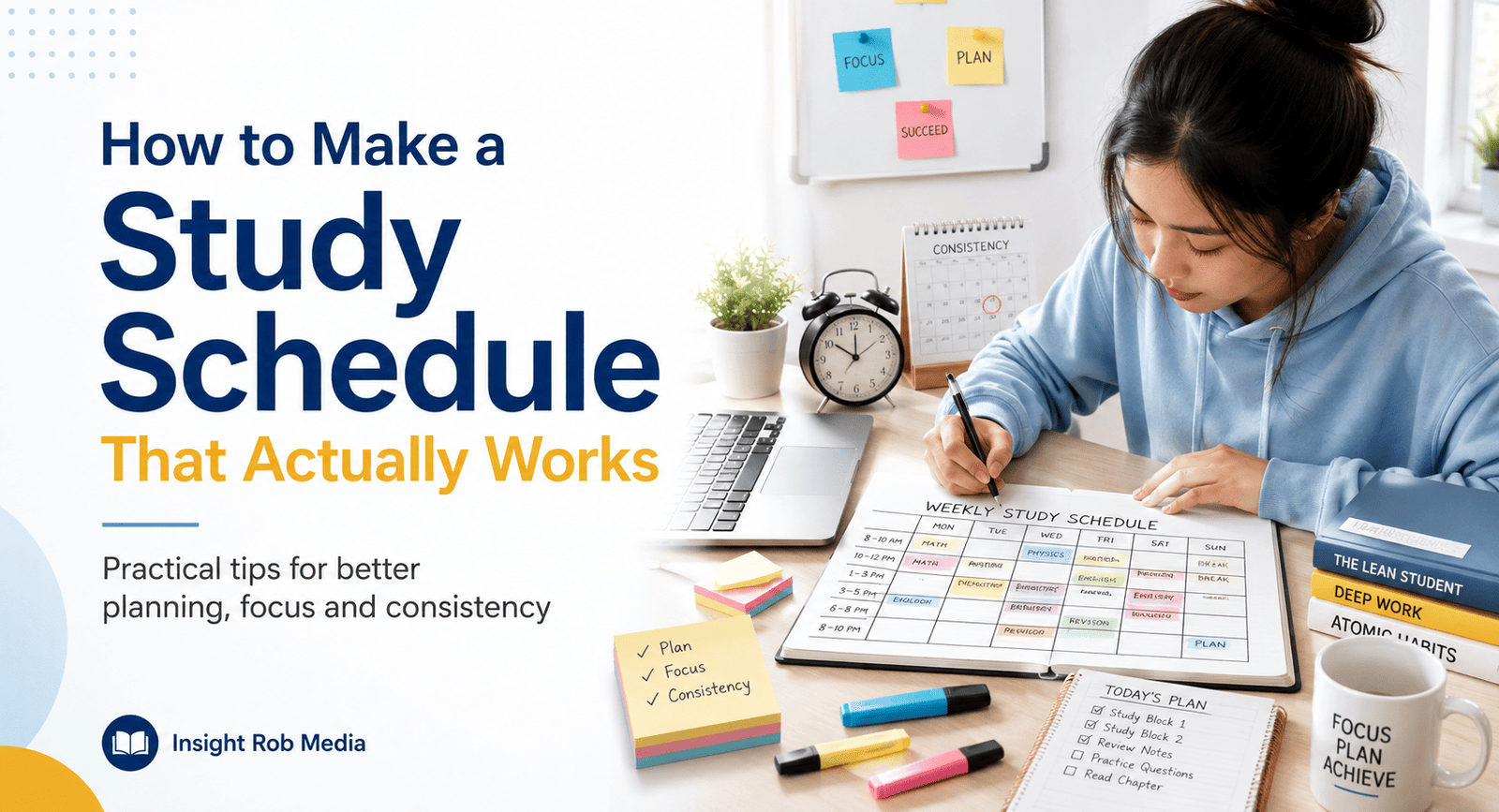



If you have only seven days left before an exam, do not try to study everything from the beginning. Start by identifying high-priority topics, revise what you already know, practise questions every day, fix your weakest areas and protect your sleep.
A simple approach is:
- Days 1–2: assess the syllabus and revise important chapters.
- Days 3–4: strengthen weak areas and solve practice questions.
- Day 5: take a timed mock test.
- Day 6: revise mistakes, formulas and important concepts.
- Day 7: light revision, preparation and proper rest.
The final week should be about recall, practice and consolidation, not panic-driven learning.
Can You Really Prepare for an Exam in 7 Days?
Yes, seven days can make a meaningful difference, especially if you have already attended classes or studied parts of the syllabus.
However, your goal needs to be realistic.
You probably cannot master an entire semester from zero in one week. You can, however:
- cover the most important topics;
- improve recall;
- practise likely question formats;
- correct repeated mistakes;
- organise formulas and facts;
- improve exam time management.
The biggest mistake students make during the final week is spending too much time planning and too little time actively recalling information.
Step 1: Analyse the Syllabus Before You Start
Before opening the first textbook, spend 30–60 minutes understanding exactly what needs to be studied.
Divide topics into three groups.
Strong
You understand the topic and can answer questions without much help.
Moderate
You know the basic concepts but need revision.
Weak
You struggle to explain the concept or solve questions.
Start with topics that are both important and realistically improvable within the available time.
A low-priority chapter that takes eight hours to understand may be less useful than revising three frequently tested chapters in the same amount of time.
Your 7-Day Exam Preparation Plan
Day 1: Map the Syllabus and Start High-Priority Revision
Create a complete checklist of chapters.
Mark:
- important topics;
- previous exam questions;
- formulas;
- definitions;
- diagrams;
- problem types;
- topics you consistently forget.
Spend most of Day 1 on high-weight topics you already partly understand.
At the end of every study session, close your notes and write down everything you remember.
This exposes gaps much faster than repeatedly reading the same page.
Day 2: Complete the Core Topics
Continue with high-priority material.
Use short study cycles such as:
50 minutes study + 10 minutes break
or
25 minutes study + 5 minutes break
Choose whichever allows you to maintain concentration.
At the end of Day 2, you should have revised a significant portion of the most important syllabus.
Day 3: Attack Your Weak Areas
Now shift your attention to topics where you frequently lose marks.
Do not simply reread them.
Ask:
- What exactly am I not understanding?
- Is the problem conceptual?
- Am I forgetting a formula?
- Do I understand the theory but struggle with questions?
- Am I making careless calculation mistakes?
Use examples and practice problems to repair those weaknesses.
Day 4: Practise Questions Instead of Reading
Day 4 should contain much more application.
Solve:
- previous-year papers;
- sample papers;
- textbook exercises;
- teacher-provided questions;
- chapter-end tests.
Keep a separate mistake list.
Write down every mistake that you are likely to repeat.
This list becomes one of your most useful revision resources during the final two days.
Day 5: Take a Timed Mock Exam
Try to reproduce real exam conditions.
Sit somewhere quiet.
Keep only the materials allowed in the actual exam.
Set the real time limit.
Do not pause every time you get stuck.
After completing the test, review:
- questions you answered incorrectly;
- questions you left unanswered;
- questions that took too much time;
- careless errors;
- topics you thought you knew but could not recall.
Your mock-test analysis is more important than the score itself.
Day 6: Revise Mistakes and High-Yield Information
Avoid starting several completely new chapters.
Instead, revise:
- your mistake list;
- formulas;
- important dates;
- definitions;
- diagrams;
- vocabulary;
- equations;
- processes;
- difficult examples.
Test yourself frequently.
For example, look at a heading such as “Causes of Inflation,” close the book and try to list the causes from memory.
Then check what you missed.
Day 7: Light Revision and Exam Preparation
The day before the examination is not the time for a 14-hour study marathon.
Review your short notes, formulas and major concepts.
Prepare your:
- admit card;
- stationery;
- calculator if permitted;
- water bottle if permitted;
- travel plan;
- clothes;
- required identification.
Stop heavy studying early enough to relax before sleeping.
What Should You Study First?
Use this simple priority framework:
| Topic | Exam Importance | Your Knowledge | Priority |
| High weight + weak | High | Weak | Very High |
| High weight + moderate | High | Moderate | Very High |
| High weight + strong | High | Strong | Revision |
| Low weight + weak | Low | Weak | Low |
| Low weight + strong | Low | Strong | Quick Review |
This prevents you from giving every chapter equal time.
Best Revision Technique for the Last 7 Days
Active recall is usually more useful than passive rereading.
Instead of reading a page five times, ask yourself a question and attempt the answer without looking.
For example:
Question: What are the three functions of the legislative branch?
Answer from memory first.
Then check the book.
Flashcards, self-quizzes, practice problems and blank-page recall can all be used this way.
Should You Study All Night Before an Exam?
Usually, no.
Losing substantial sleep may leave you tired, distracted and mentally slow during the test.
If you must choose between another late-night hour of unfocused reading and sufficient rest, sleep is often the more sensible choice.
Plan the week so that you do not need an all-night session on Day 7.
Common Last-Minute Exam Preparation Mistakes
Trying to Learn Everything
Prioritisation becomes essential when time is limited.
Making Beautiful Notes
You have seven days, not seven weeks.
Use short functional notes.
Only Reading
Reading can create a false feeling of familiarity.
Test yourself.
Ignoring Practice Papers
Knowing a chapter and answering questions under time pressure are different skills.
Studying Without Breaks
Long hours are not useful if your attention has already disappeared.
Comparing Yourself With Friends
Someone else saying, “I finished the syllabus twice,” does not improve your preparation.
Focus on your own plan.
A Sample Daily Schedule
7:00 AM: Wake up and breakfast
8:00–10:00 AM: Difficult/high-priority topic
10:00–10:30 AM: Break
10:30 AM–12:30 PM: Second study block
12:30–2:00 PM: Lunch and rest
2:00–4:00 PM: Practice questions
4:00–5:00 PM: Break/walk
5:00–7:00 PM: Revision
7:00–8:00 PM: Dinner
8:00–9:30 PM: Flashcards/mistake review
10:30 PM: Prepare for sleep
Adjust the schedule to your usual routine.
Frequently Asked Questions
Is 7 days enough to prepare for an exam?
Seven days can be enough for focused revision and significant improvement, especially if you already know some of the syllabus. Prioritise important topics rather than trying to master everything.
How many hours should I study in the last week?
There is no perfect number. Focused study sessions with adequate breaks, food and sleep are generally more useful than extremely long but distracted sessions.
Should I study new topics one day before the exam?
Only if the topic is simple and important. Otherwise, spend your final day strengthening information you have already studied.
What is the fastest way to revise?
Use active recall, practice questions, concise notes and a list of your previous mistakes.
What should I do if I have not studied anything?
Start with the highest-weight topics and basic concepts. Avoid wasting the remaining time feeling guilty about the days already lost.
Final Thoughts
The best last minute exam preparation tips are not about studying every waking minute. They are about making better decisions with limited time.
Prioritise what matters, practise retrieving information, solve questions, analyse mistakes and protect your energy.
Seven organised days can be far more productive than several weeks of unfocused preparation.