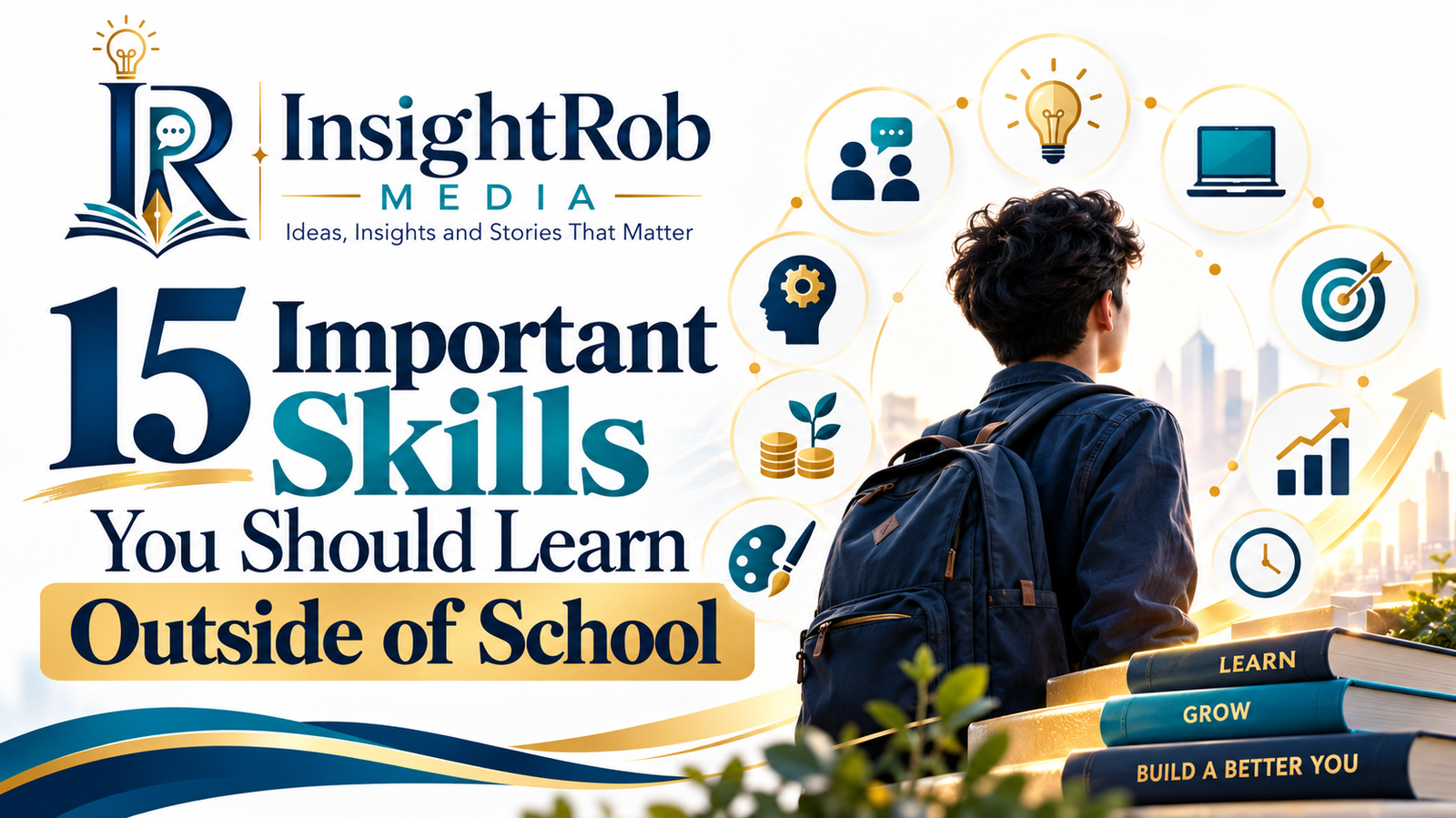




Some of the most important skills students can develop outside formal education include communication, financial literacy, negotiation, critical thinking, digital skills, networking, emotional self-management, career planning and basic professional communication.
School can provide a strong academic foundation, but many practical abilities improve primarily through real-world use.
1. Clear Communication
Learn how to explain an idea simply.
Practise:
- speaking;
- listening;
- writing;
- asking good questions.
Communication matters in almost every career.
2. Professional Email Writing
Students should know how to write a concise professional email.
A basic structure is:
Subject → Greeting → Purpose → Necessary Details → Action → Thanks
Avoid sending:
“Hi sir job?”
Instead:
“Hello Mr Sharma, I am a final-year economics student interested in your research internship. I have attached my CV and would be grateful if you could let me know whether applications are currently open.”
Clarity creates a stronger impression.
3. Personal Finance Basics
Learn the fundamentals of:
- budgeting;
- saving;
- interest;
- debt;
- insurance;
- taxes;
- investing;
- emergency funds.
You do not need to become a finance expert.
You do need to understand where your money goes and what financial commitments mean.
4. Negotiation
Negotiation is not arguing.
It is understanding interests and finding acceptable terms.
You may negotiate:
- salary;
- project deadlines;
- freelance fees;
- responsibilities;
- rent;
- purchases.
Learn to ask clearly rather than expecting the other person to guess what you need.
5. Critical Thinking
Before accepting a claim, ask:
- What is the source?
- What evidence is provided?
- Is the evidence current?
- Is correlation being presented as causation?
- Is important context missing?
- What would change my mind?
This skill is increasingly valuable in an information-heavy world.
6. Research and Verification
Learn how to find reliable information.
Do not stop at the first search result.
Compare sources.
Look for original data when possible.
Check dates.
Verify surprising claims.
7. Digital Literacy
Students should know more than how to use social media.
Useful digital skills include:
- spreadsheets;
- documents;
- presentations;
- cloud storage;
- online research;
- cybersecurity basics;
- AI tool literacy.
The exact tools will change.
The ability to learn new tools matters more.
8. Basic Cybersecurity
Learn habits such as:
- using strong unique passwords;
- recognising phishing;
- enabling multi-factor authentication;
- updating software;
- avoiding suspicious links;
- protecting personal information.
A small mistake online can create large problems.
9. Networking
Networking means building genuine professional relationships.
You can begin by:
- asking thoughtful questions;
- attending events;
- staying in touch;
- helping others where possible;
- following up after meetings.
Do not contact people only when you need a job.
10. Public Speaking
You may need to present:
- a project;
- a proposal;
- research;
- an idea;
- yourself in an interview.
Practise speaking in front of small groups.
Record yourself.
Improve gradually.
11. Problem-Solving
When facing a problem, avoid jumping directly to a solution.
Use:
Problem → Cause → Options → Trade-offs → Action → Review
This reduces impulsive decisions.
12. Time Management
A student who manages time well has an advantage beyond exams.
Learn to:
- prioritise;
- plan;
- estimate task duration;
- meet deadlines;
- protect focus.
Being busy and being effective are not the same.
13. Emotional Self-Management
You cannot control every event, but you can improve how you respond.
Useful abilities include:
- recognising emotions;
- pausing before reacting;
- handling criticism;
- managing frustration;
- communicating disagreements respectfully.
14. Career Management
Do not wait until graduation to think about employability.
Learn how to:
- create a CV;
- build a portfolio;
- prepare for interviews;
- research companies;
- understand job descriptions;
- contact professionals.
Career development is an ongoing skill.
15. Learning How to Learn
This may be the most transferable skill.
Technology and industries change.
Students who can teach themselves new skills can adapt.
A simple learning cycle is:
- choose a specific skill;
- learn the basics;
- practise;
- receive feedback;
- correct mistakes;
- build a real project;
- repeat.
Which Skill Should You Learn First?
Choose based on your current bottleneck.
If you struggle in interviews:
communication
If you repeatedly miss deadlines:
time management
If money disappears every month:
personal finance
If you want a technology career:
digital skills
If you are entering the workforce:
professional communication + career management
Do not try to master all 15 simultaneously.
How to Learn Skills Outside School
Take a Short Course
Learn the fundamentals.
Practise Immediately
Knowledge without application fades.
Build Projects
Projects create evidence of ability.
Ask for Feedback
You cannot see all your own weaknesses.
Teach Someone Else
Explaining a concept exposes gaps.
FAQs
What are the most important skills not taught in school?
Communication, financial literacy, negotiation, digital literacy, networking, career management and practical problem-solving are useful examples.
Which skill is most important for students?
There is no single answer. Communication and the ability to learn independently are highly transferable across many careers.
Can soft skills be learned?
Yes. Communication, leadership, negotiation and similar skills improve through deliberate practice, experience and feedback.
Should students learn coding?
Coding can be valuable for certain careers, but not every student needs to become a programmer. Basic digital literacy is useful much more broadly.
How can I prove skills to employers?
Use projects, portfolios, internships, work samples, certifications where relevant and concrete examples during interviews.
Final Thoughts
Many important skills not taught in school are learned through practice rather than textbooks.
You do not need to learn everything immediately.
Pick one skill that would make your current life noticeably easier.
Practise it in real situations.
Then build the next one.
Over several years, those practical skills can become as valuable as many things written on your academic transcript.