












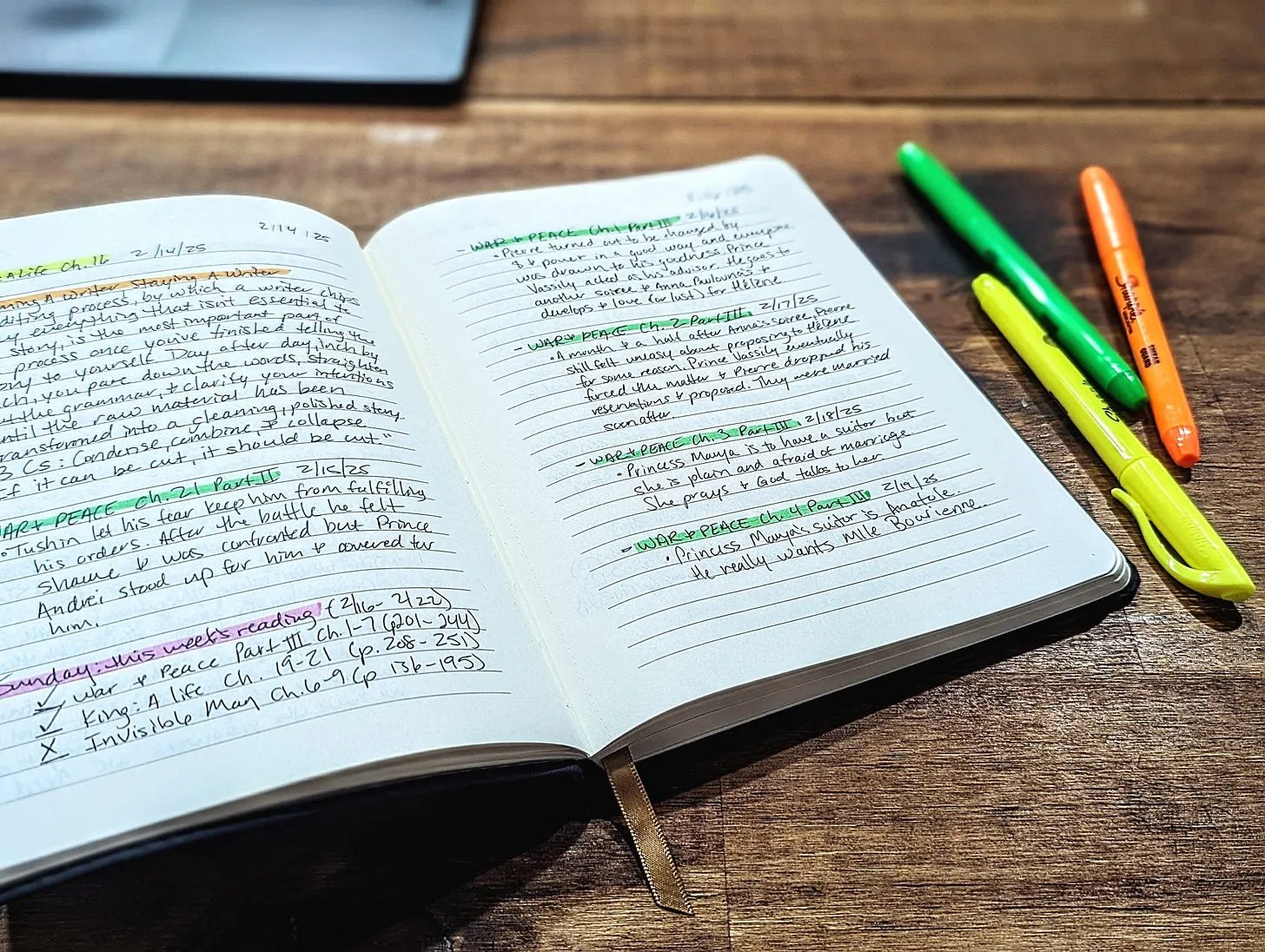
The best note taking method for students is one that forces you to process information rather than copy it.
For most students, an effective system combines:
- short handwritten or typed notes;
- questions in your own words;
- summaries after class;
- active recall;
- spaced review.
Methods such as Cornell notes, outline notes, mind maps and question-based notes can all work. The best choice depends on the subject.
Why Do Students Forget Their Notes?
The problem is often not memory.
It is the way the notes were created.
If you copy everything a teacher says, you may produce ten pages without thinking deeply about any of them.
Good notes should help you:
- identify key concepts;
- simplify difficult ideas;
- connect information;
- generate questions;
- review efficiently.
Your notebook should not be a transcript.
It should be a learning tool.
What Is the Best Note Taking Method for Students?
There is no single method for every subject.
A useful approach is:
- Cornell method for lectures and theory-heavy subjects;
- outline method for structured chapters;
- mind maps for connected concepts;
- charting for comparisons;
- question-and-answer notes for exam preparation.
Let’s look at each.
1. The Cornell Note Taking Method
Divide your page into three sections:
Main Notes
Use the large right-hand area for concepts, examples and explanations.
Cue or Question Column
On the left, write questions that your main notes answer.
For example:
Cue: What is photosynthesis?
Your notes explain the process on the right.
Summary
At the bottom, summarise the entire page in two to four sentences.
The advantage of this method is that the question column naturally becomes an active-recall tool.
Cover the main notes and answer the questions without looking.
2. The Outline Method
The outline method organises information by hierarchy.
Example:
1. Human Digestive System
- Mouth
- chewing
- saliva
- Oesophagus
- transports food
- Stomach
- acid
- enzymes
This works well when information follows a clear sequence or structure.
It is especially useful for:
- history;
- biology;
- business studies;
- political science;
- theoretical subjects.
3. Mind Mapping
A mind map starts with one main idea in the centre.
Branches then connect related concepts.
For example:
Climate Change
Branches could include:
- causes;
- effects;
- mitigation;
- adaptation;
- international agreements.
Mind maps are useful when understanding relationships matters more than memorising a fixed sequence.
Avoid making them too decorative.
Their purpose is to clarify connections, not become an art project.
4. Question-Based Notes
This is one of the most practical methods for exam preparation.
Instead of:
“Inflation is the sustained increase…”
write:
Q: What is inflation?
Then write a concise answer.
Instead of headings alone, convert them into questions.
This turns your notes into a ready-made revision resource.
5. Charting Method
Use tables for information that needs comparison.
Example:
| Feature | Mitosis | Meiosis |
| Number of divisions | One | Two |
| Daughter cells | Two | Four |
| Genetic similarity | Usually identical | Different |
| Function | Growth and repair | Sexual reproduction |
For comparative topics, a table can communicate more clearly than several paragraphs.
How to Take Notes During a Lecture
Do not write every sentence.
Listen for:
- definitions;
- repeated ideas;
- examples;
- formulas;
- processes;
- causes and effects;
- points the teacher emphasises;
- topics connected with exams.
Use abbreviations where helpful.
For example:
- “because” → “b/c”
- “important” → “imp.”
- “with” → “w/”
Your goal is to capture meaning quickly.
The 10-Minute Rule After Class
Within the same day, spend approximately 10 minutes cleaning up the notes.
Do three things:
Add Missing Context
Sometimes shorthand makes sense during class but becomes confusing three days later.
Clarify it while the lecture is still fresh.
Write Questions
Turn major ideas into questions.
Add a Short Summary
Explain the lesson in your own words.
If you cannot summarise it, you may not understand it yet.
How to Remember Your Notes
Notes become memorable through retrieval and repeated exposure.
Try this review schedule:
Same day: quick review
Next day: test yourself
3–4 days later: review weak points
One week later: attempt questions again
Before exam: focus on errors
Do not simply reread every time.
Cover the answer and attempt to recall it first.
Handwritten Notes vs Digital Notes
Both can work.
Handwritten Notes Are Helpful When:
- you want fewer distractions;
- you prefer diagrams;
- you need to slow down and summarise;
- your subject uses formulas.
Digital Notes Are Helpful When:
- you need searchable notes;
- you organise many subjects;
- you want easy backups;
- you frequently reorganise information.
The tool is less important than what your brain is doing while using it.
Typing a paragraph without thinking is not automatically better because it is digital.
A Simple Note-Taking Template
Use the following structure for almost any topic:
Topic:
Date:
Main question:
Key concepts:
Important terms:
Example:
Common mistake:
Questions I should be able to answer:
3-sentence summary:
This format creates notes that are useful during revision.
Mistakes That Make Notes Hard to Remember
Copying the Textbook Word for Word
Rephrase information where possible.
Highlighting Everything
If 80% of a page is highlighted, nothing stands out.
Never Reviewing Notes
Creating notes is only the first step.
Making Notes Too Long
Your notes should usually be easier to review than the original material.
Ignoring Practice
Notes alone do not prepare you for numerical problems, essays or timed exams.
Frequently Asked Questions
What is the most effective note taking method?
For many students, the Cornell method is a strong starting point because it combines structured notes, questions and summaries. However, the best method depends on the subject and your learning task.
Is writing notes by hand better?
Handwriting can encourage slower processing, while digital notes offer speed and organisation. Choose the format that helps you stay engaged and review regularly.
Should I rewrite my notes before exams?
Only if rewriting improves understanding. Copying the same information neatly without testing yourself can waste valuable revision time.
How do I make notes for competitive exams?
Focus on concise facts, formulas, concepts, previous-question patterns, mistakes and revision-friendly question-and-answer formats.
How often should I revise notes?
Review them shortly after learning, then revisit them periodically. Spend more time on information you struggle to recall.
Final Thoughts
The best note taking method for students is not the one that creates the prettiest notebook.
It is the one that makes you think.
Create concise notes, turn concepts into questions, review them regularly and practise retrieving the answers without looking.
That is when notes stop being a record of what you studied and become a tool that helps you remember it.